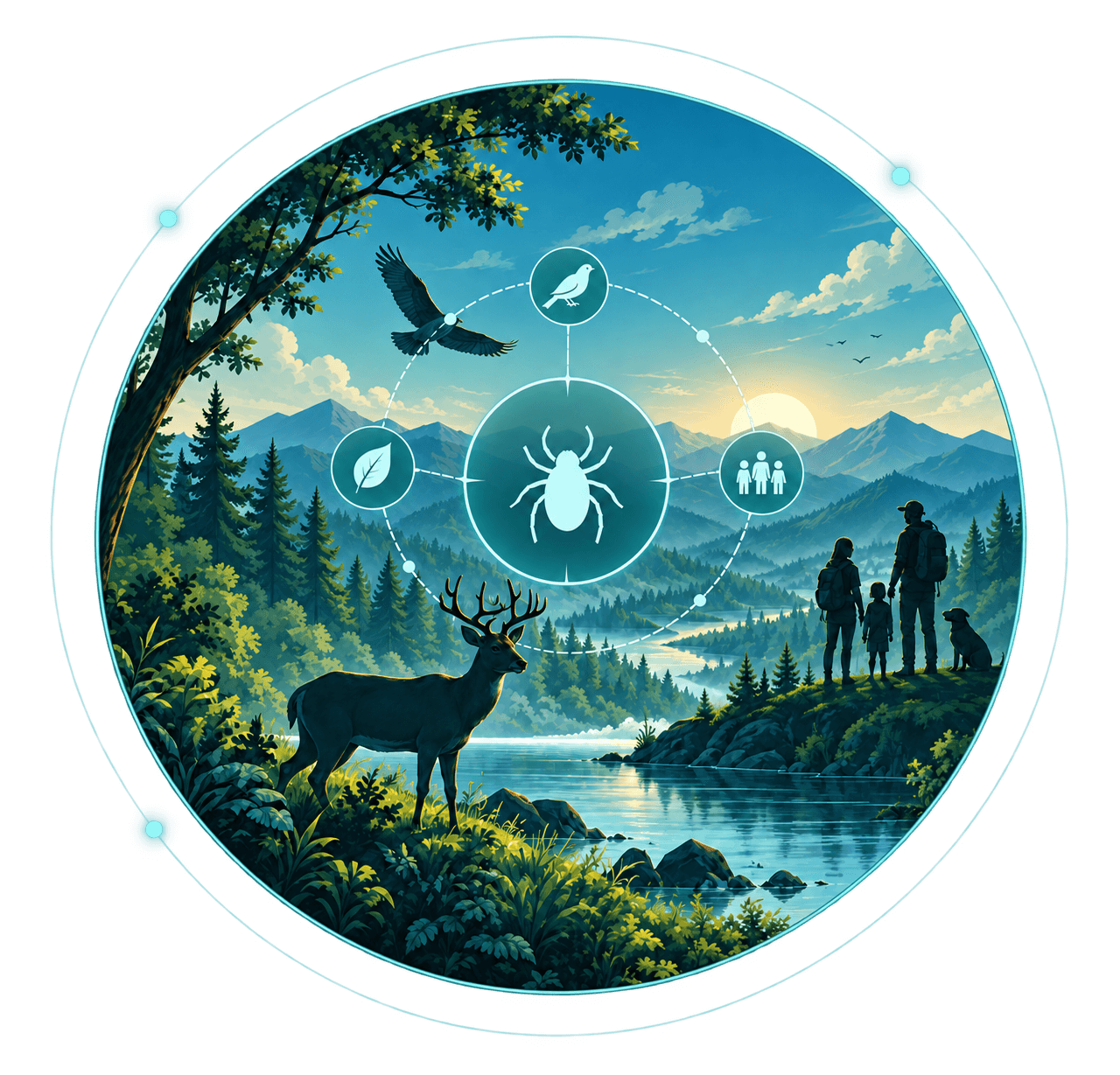
Human health, vectors, and environmental conditions each reveal part of the picture. One Health Atlas helps public health professionals connect those perspectives and decide what deserves a closer look.
What can we learn by looking at the data together?
Reported Lyme cases show part of the picture. Tick surveillance, environmental data, and community context add other perspectives. Follow the Buncombe County example to see what becomes clearer—and what questions remain.
01 / The first signal
Start with reported human illness.
Reported Lyme disease cases show where illness was recognized and recorded. They provide a starting point for understanding the county, while leaving questions about infections that were not reported and where exposure occurred.
Cases are reported by county of residence, which may differ from where exposure occurred.
Human surveillanceReported cases provide a starting point for review.
02 / The vector view
Add tick and pathogen data.
Tick surveillance records where ticks have been found. Pathogen testing adds information about what was detected in the samples tested. Together, these data add another perspective to the human case record.
Where, when, and how ticks were sampled shapes what the results can tell us.
Tick and pathogen evidenceTick observations and testing add another perspective.
03 / The shared context
Place the data in context.
Landscape, weather, and community conditions—including access to care—help frame the picture. Considering these alongside human and tick data brings the One Health approach into public health review.
County-level patterns do not establish individual risk or show that one condition caused another.
A One Health perspectiveLocal conditions help frame public health questions.
ATLAS / DATA VIEWGeographic focus · Buncombe County, NC
Buncombe CountyNorth Carolina · United States
◌Human disease surveillanceReported cases provide a starting point for review.
⌁Tick and pathogen surveillanceTick observations and testing add another perspective.
✳Environmental and community contextLocal conditions help frame public health questions.
Interpret data in light of their source, location, and time period.Human data
Confidence through clarity
What's missing from the data matters, too.
Understanding a dataset means knowing where it came from, when it was collected, and what it can tell us. Atlas brings sources, coverage, and limitations into view so public health professionals can interpret the data in context.
Know what you're looking at
SourceSee where the data came from
Time periodKnow when the data were collected or reported
CoverageSee where data are available and where gaps remain
LimitationsUnderstand what the data can and cannot tell you
Continue exploring
One place to see the bigger picture.
Bring human surveillance, tick and pathogen data, and environmental and community context together. Explore county patterns, review the available data, and identify questions for follow-up.